






See Disclaimer below.
CLASSIC SOURCES:
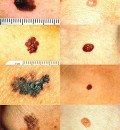
June, 2011 issue of the Archives of Dermatology, a Journal of the American Medical Association, concluded: "Screening and surveillance efforts should focus on patients 50 years or older and those with a personal history of skin cancer or a family histo...
To help identify when a mole or skin discoloration may be of concern, see this slide show by the Mayo Clinic. If you have any questions or doubt, see your doctor. Most skin melanomas can be cured, and the survival rate if high, IF you catch and t...
Cleveland Clinic. Describes and pictures the three major types of skin cancer, basal cell carcinoma, squamous cell carcinoma, and melanoma, and explains the signs and symptoms of each, how each is diagnosed, and when you should be examined by a docto...
SkinCancerNet, website of the American Academy of Dermatology. Explains what is involved in diagnosing skin cancer. “The only way to confirm or exclude the presence of skin cancer is with a biopsy. A biopsy is a diagnostic procedure tha...
American Cancer Society. Describes the signs and symptoms and different types of biopsies used to diagnose squamous cell and basal cell carcinoma. >>View Info
American Cancer Society. Describes the The American Joint Committee on Cancer (AJCC) TNM System of staging cancers. Staging is the process of finding out and classifying how far a cancer has spread. This is part of the diagnosis, although basal c...
SkinCancerNet, website of the American Academy of Dermatology. Explains how to perform a skin self-examination for skin cancer, and also generally what is involved in an examination by a dermatologist. >>View Info
American Cancer Society. Describes the procedures used to diagnose melanoma, including the physical exam with medical history, the different types of biopsies used to diagnose melanoma, and imaging tests used to determine how far the cancer may have ...
SkinCancerNet, website of the American Academy of Dermatology. When skin cancer is diagnosed, the first thing the dermatologist must find out is how far it has spread. This is staging. This website page explains the process for staging. ...
National Cancer Institute, National Institutes of Health, U.S. Department of Health & Human Services. 25 page booklet with comprehensive information on common moles and dysplastic nevi (atypical moles). Shows what moles look like and how they m...
See Archives of Additional Classic Sources on Skin Cancers – Symptoms & Diagnosis.
…………………………………………………………….. Back to Top…
MORE SOURCES (CONTINUALLY UPDATED):

The U.S. Food and Drug Administration (FDA) announced on Friday that the National Council on Skin Cancer Prevention has designated the Friday before Memorial Day (May 25) as "Don't Fry Day," and FDA is participating in this national campaign to "spread...
See Archives of More Sources (Continually Updated) on Skin Cancers – Symptoms & Diagnosis.
…………………………………………………………….. Back to Top…
The information linked on this site is for information only. It does not constitute medical or professional advice, and must not be relied upon as such. You should always consult your doctor before reaching conclusions, taking medications, or taking or refraining from taking any other action. HelpingYouCare™ and its owner, Care-Help LLC, do not endorse or recommend and are not responsible for the content on other websites or in other publications to which we may link, or for any content written by others and posted or linked on this site.
By accessing this website, you agree to all of our Legal Terms & Conditions.
…………………………………………………………….. Back to Top…
