



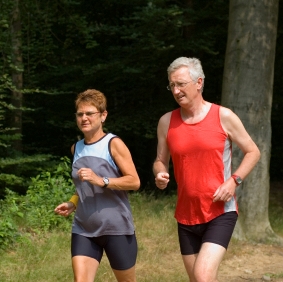
 A study in the Journal of the American Medical Association JAMA has found that walking speed in people 65 and older correlates with expected longevity.
The study, conducted by researchers at the University of Pittsburgh, was based on combined data from nine large studies that involved more than 34,000 seniors. Each of these studies timed subjects’ comfortable walking speed for about 13 feet at the beginning of the study, and then periodically re-tested during periods of up to 21 years. The results showed a marked correlation between walking speed and longevity. The faster the subjects could walk, the longer they could be expected to live.
Walking speed requires coordinated functioning of many body systems, including the heart, lungs, blood, bones, muscles, joints, nerves and brain. Depending on how well all of these systems synchronize, coordinate and integrate with each other, each person can and essentially does choose his or her own ideal walking speed, and this speed remains remarkably constant throughout life unless it’s affected by medical issues.
Because walking speed reflects how well each of these many body systems function and coordinate with each other, scientists consider walking speed, when correlated with age and sex, to be a reflection of their underlying health, and therefore a predictor of how long the person will live.
Read More in this report by ABC News » Walking Speed Predicts Longevity in Elderly – ABC News.
Read More about the Study in the Journal of the American Medical Association JAMA

